
Self-Drilling vs Self-Tapping Screws: Which Do You Need?
How drill point and sharp point screws differ, and how to choose between them for steel framing, drywall and timber.
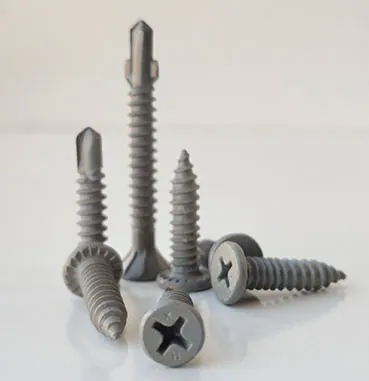
"Self-drilling" and "self-tapping" are often used as if they mean the same thing, but they describe two different screw points. Picking the wrong one is one of the most common reasons screws spin, strip or snap on site. Here is how to tell them apart and choose correctly.
What is a self-drilling screw?
A self-drilling screw has a drill point: a small fluted tip shaped like a twist drill. It cuts its own hole in steel, then the thread forms in that hole, so it drills, taps and fastens in one step with no pilot hole. Self-drilling screws are used for steel-to-steel connections and for fixing boards or sheets to steel framing.
Drill points come in different sizes, usually shown as a number such as #2 or #3. A larger drill point is made for thicker steel. Always check the drilling capacity on the screw's datasheet against the total steel thickness you are fixing through.
What is a self-tapping (sharp point) screw?
A self-tapping screw, also called a sharp point or needle point screw, has a sharp tip with no drill flute. It pierces thin material and forms its own thread as it turns. It works well in timber and in thin steel such as light drywall studs and furring channels, but it cannot drill through thicker steel. For thicker metal it needs a pilot hole.
Quick comparison
| Self-drilling (drill point) | Self-tapping (sharp point) | |
|---|---|---|
| Point | Fluted drill point | Sharp, pointed tip |
| Pilot hole | Not needed in steel within its drilling capacity | Needed in thicker steel |
| Best for | Steel framing, heavier studs, metal-to-metal | Timber, thin steel studs and channels |
| Watch out for | Choosing a drill point too small for the steel | Using it on steel that is too thick |
Which HIFIX screw should I use?
- Steel stud and truss framing: LGS HX self-drilling framing screws. SPL HX is the sharp point option on the same page.
- Gypsum board on steel studs: GYP HX drywall screws, available in self-drilling and sharp point versions.
- Gypsum board on timber and light steel: GYP HX Self-Tapping.
- Fibre cement board on steel: CEM HX winged self-drilling screws.
- Metal roofing and cladding: Roof HX self-drilling roofing screws.
Not sure which point suits your steel thickness? Send the Hifix team your material details and we will recommend the right screw.
Frequently asked questions
Can I use a self-tapping screw instead of a self-drilling screw?
Only in timber or thin steel. In thicker steel a sharp point screw cannot drill its own hole, so you would need to pre-drill. A self-drilling screw saves that step.
Are self-drilling screws also self-tapping?
Yes. A self-drilling screw drills the hole and then taps its own thread, so it is a type of self-tapping screw with a drill point added.
What does the drill point number mean?
It indicates the size of the drill point. Larger numbers are designed to drill thicker steel. Check the drilling capacity on the datasheet.
Need help choosing a screw?
Tell us what you are fixing and what you are fixing it to. The Hifix team will recommend the right screw and send a quote.